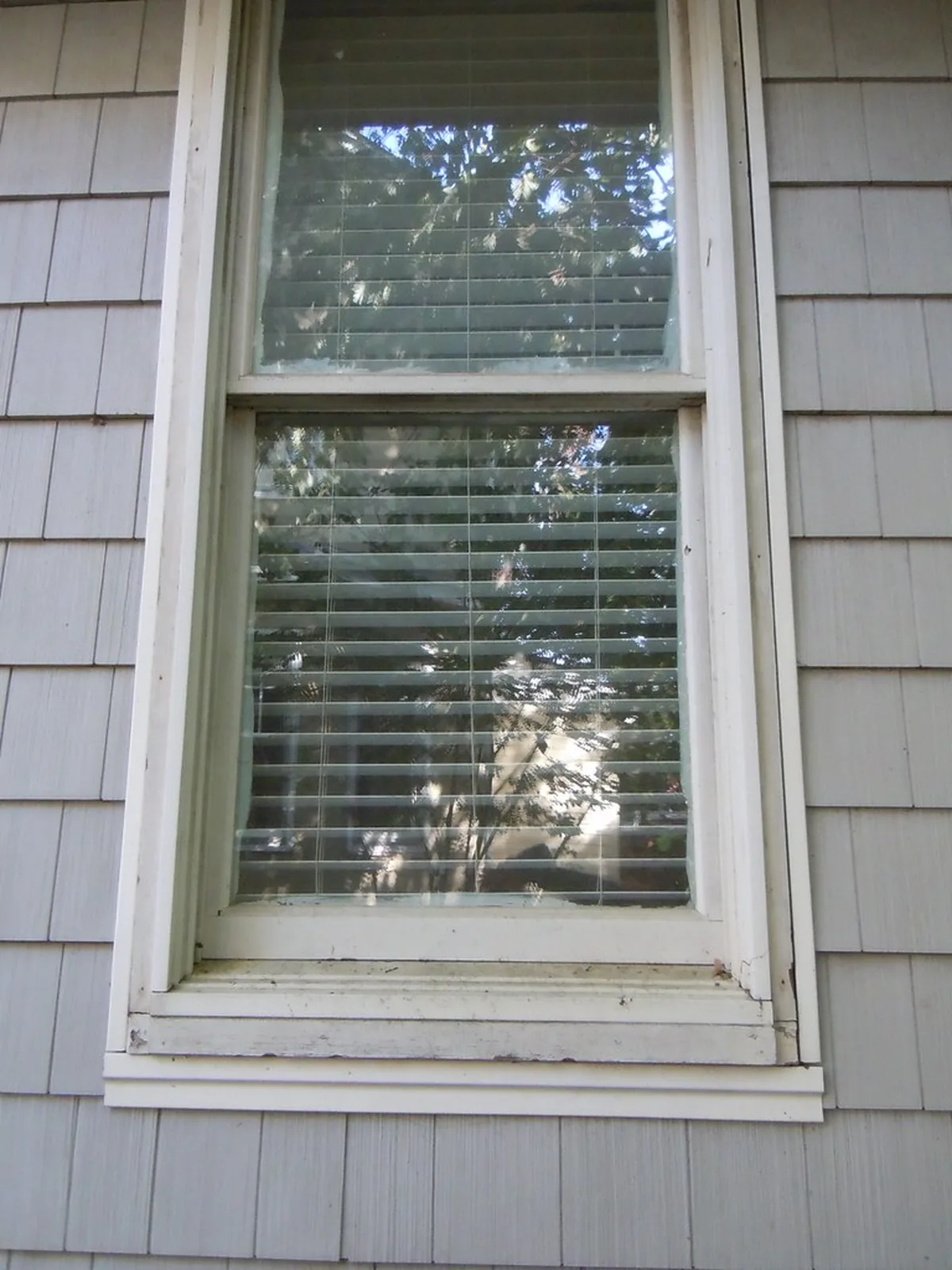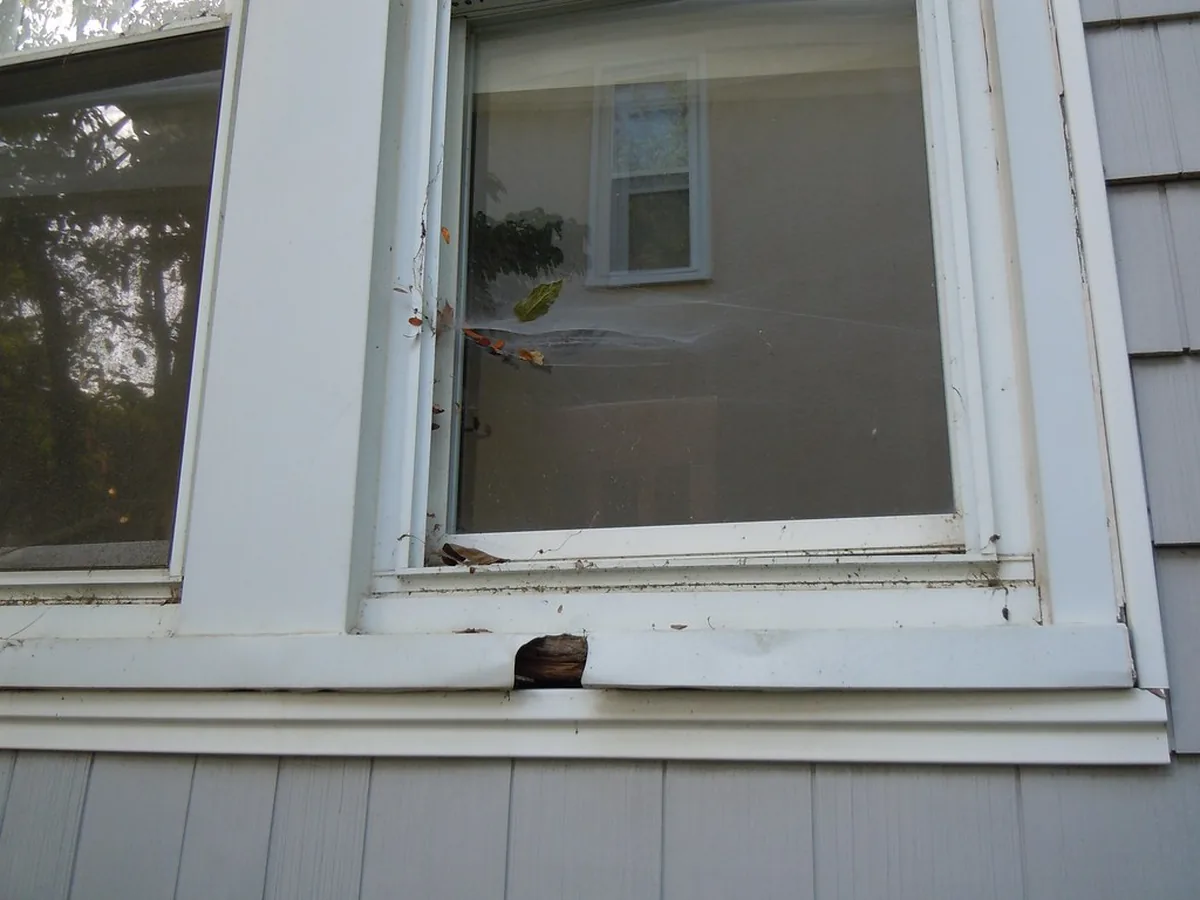
Window sill and trim rot in McDonough, GA: where the water gets in
Six routes account for nearly every rotted window on a house, and most rotted windows have two or three of them working at once. Finding the route matters more than counting the damage, because a repair made without closing the route is a countdown rather than a fix.
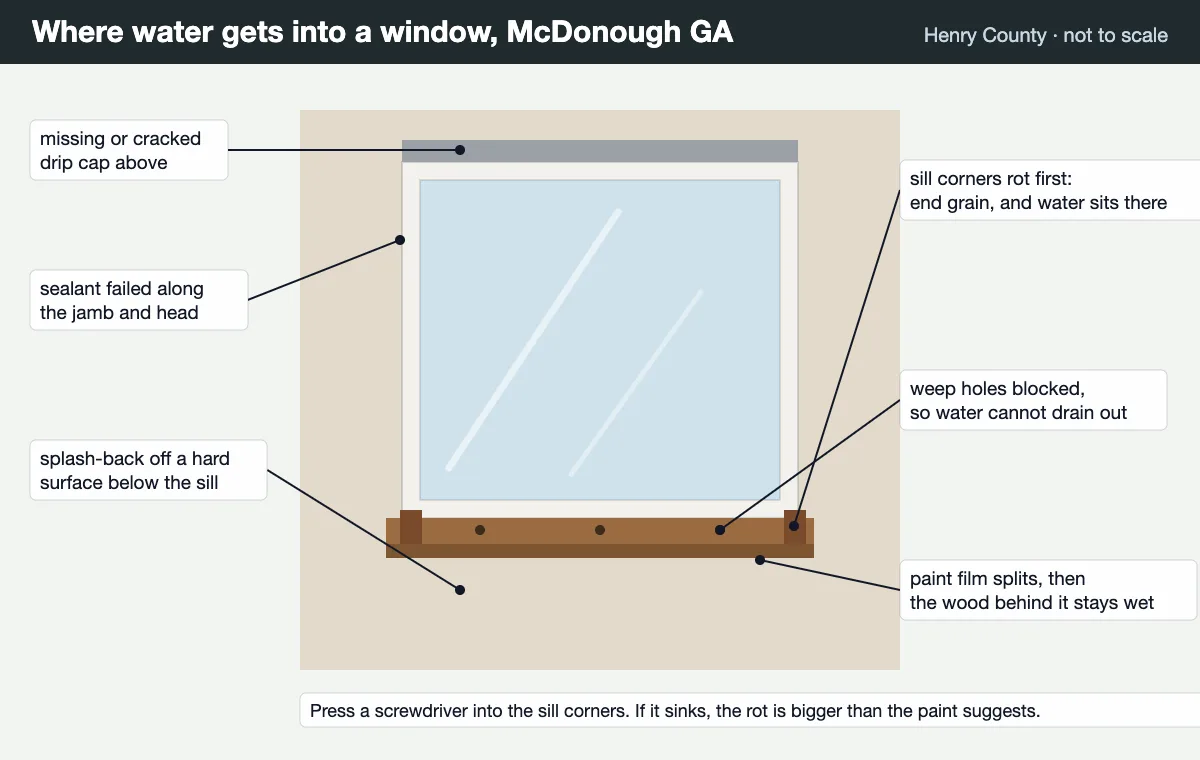
| Route | What it looks like | What it leads to |
|---|---|---|
| Failed sealant at jambs and head | A split bead of caulk, or none at all | Water tracking down behind the casing |
| Missing or cracked drip cap | No flashing visible above the trim | Water running straight onto the top of the casing |
| Blocked weep holes | Small holes in the bottom of a frame, clogged | Water sitting inside the sill instead of draining |
| Splash-back | Hard surface, path or concrete right below the window | Rain bouncing up onto the sill and casing |
| Split paint film | Fine cracks and blisters on the same face each year | Wood staying wet under an intact-looking finish |
| End grain at sill corners | Dark, soft corners that take a screwdriver | The classic first rot location on any window |
Swipe the table sideways to see every column →
Compiled for this site from the way window assemblies are built and drained, as the rot pattern on local houses reflects. Georgia's rainfall runs right through the year, with summer alone averaging around 15 inches, so the drying window between wettings is short.
Test your own before anyone looks at it
A screwdriver and five minutes will tell you which conversation you are about to have. Sound wood pushes back; rotted wood takes the tip with hand pressure and keeps going. Work along the whole sill rather than poking the one spot you noticed, because rot travels along the grain and the visible patch is usually the smallest part of it.
- Probe the full length of the sill, not just the spot you noticed. Rot spreads along the grain.
- Check the casing bottoms on both sides, where water runs off the sill.
- Check inside: staining or a soft interior stool often means the water got past the frame.
- Look directly below the window for splash-back surfaces that will undo any repair.
- Find out where the water came in before fixing what it damaged.
- Note how old the window itself is. On an old unit, the sill finding and the window decision are the same decision.
Why rot is replacement work, not a separate repair
Rotted sills and trim get handled as part of a window replacement because that is the only point at which anyone can see what the water did. Until the unit is out of the opening, the sheathing, the framing under the sill and the flashing above the head are all hidden behind the frame, and the visible damage is a guess at the real extent. This is work the installer does at the opening, on the same visit as the window, not a repair you book on its own.
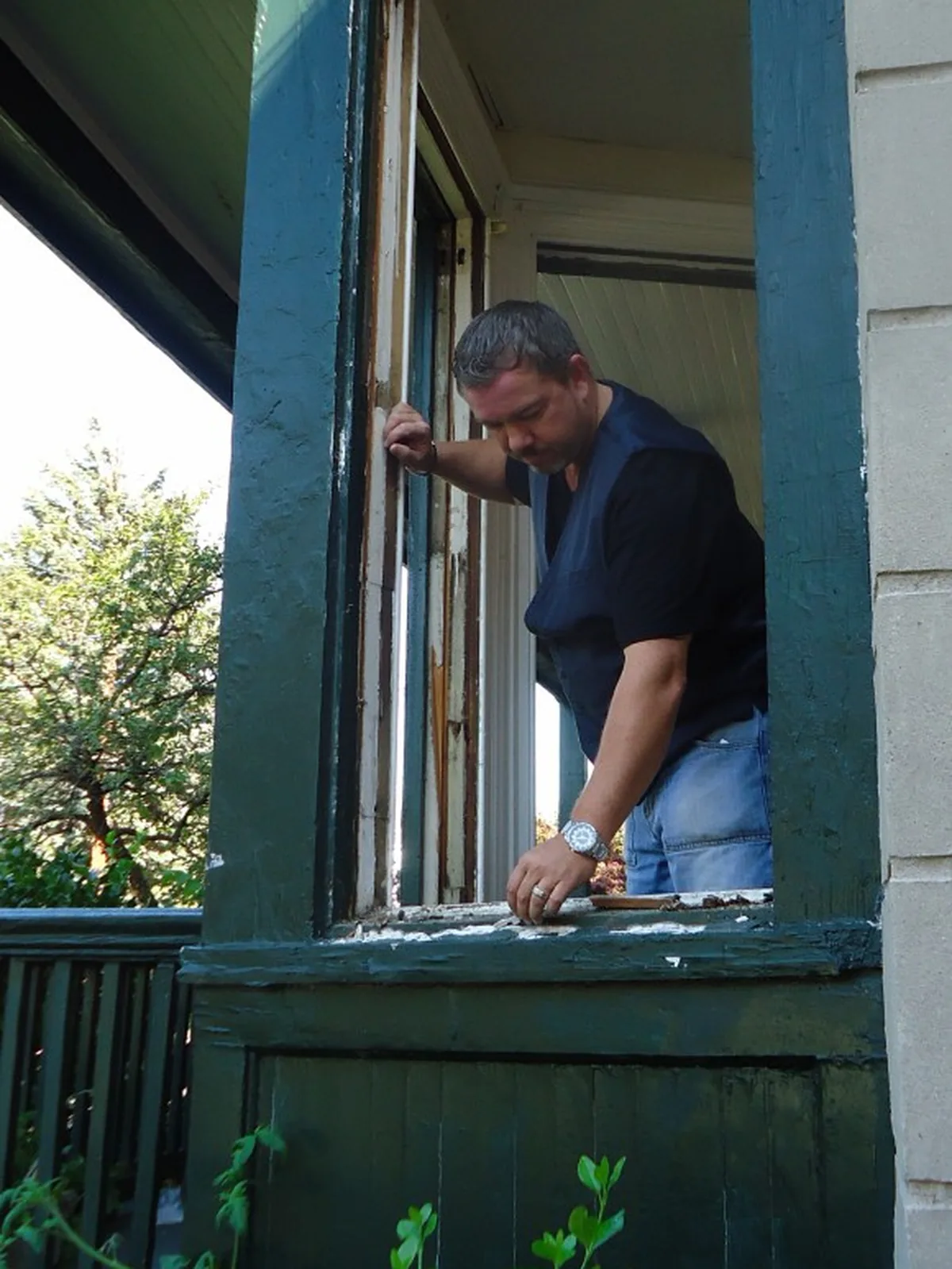
Two-part epoxy consolidant and filler is still a legitimate repair for small, contained damage in a piece worth keeping, particularly a profiled sill or casing on an older house, and a carpenter or painter is who does that work. It is not a legitimate repair for a sill that is soft along its length, for anything structural, or as a way to avoid finding out how far the water went.
What happens to the opening when the window comes out
Full-frame replacement exists for exactly this situation. The old frame, sill and trim come out back to the rough opening, the sheathing behind gets inspected, the flashing gets redone and the new unit goes in against sound material. Insert replacement, by contrast, sets a new window inside the old frame, which is a fine method on a sound opening and the wrong method over rot.
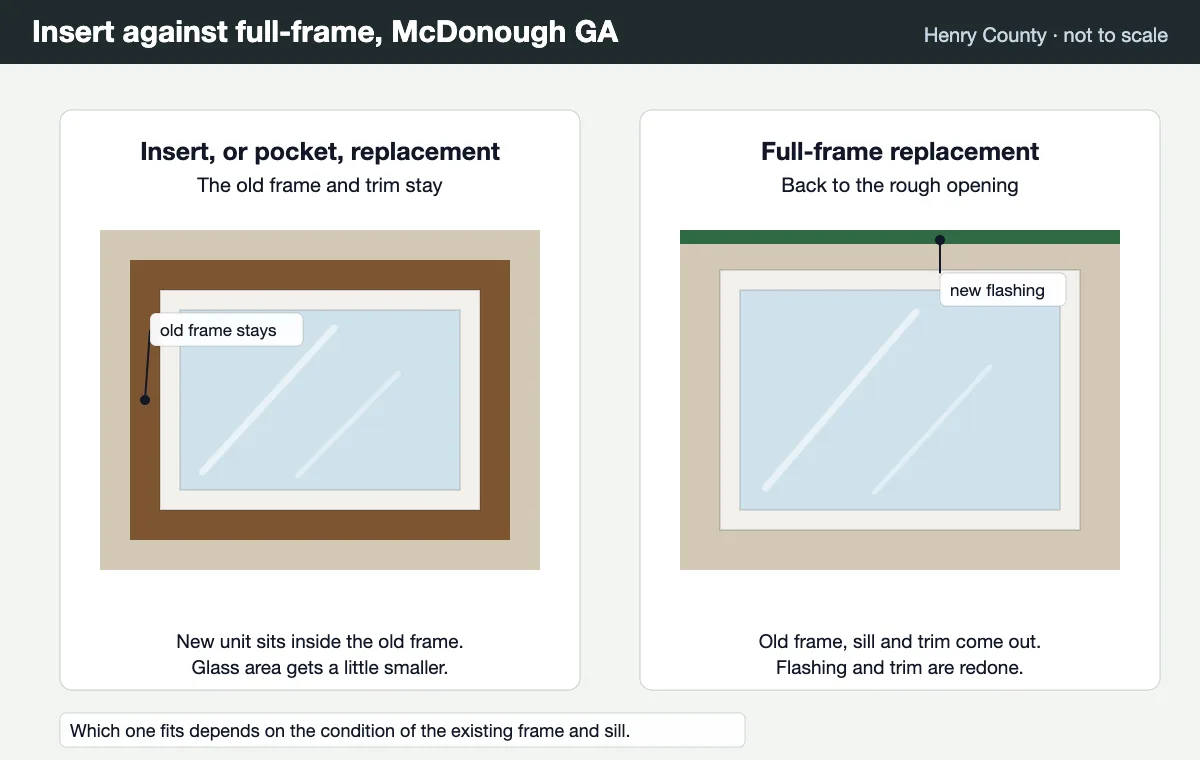
The window installation page covers both methods and how each one is measured, and repair or replace covers the faults that have nothing to do with water.
Material choices for the new trim
PVC and composite trim do not rot, take paint and are the obvious answer for the sill and the lowest part of the casing, where water actually sits. Wood is still the right answer where a profile needs matching. Nobody looking at a finished, painted window from the street can tell which is which.