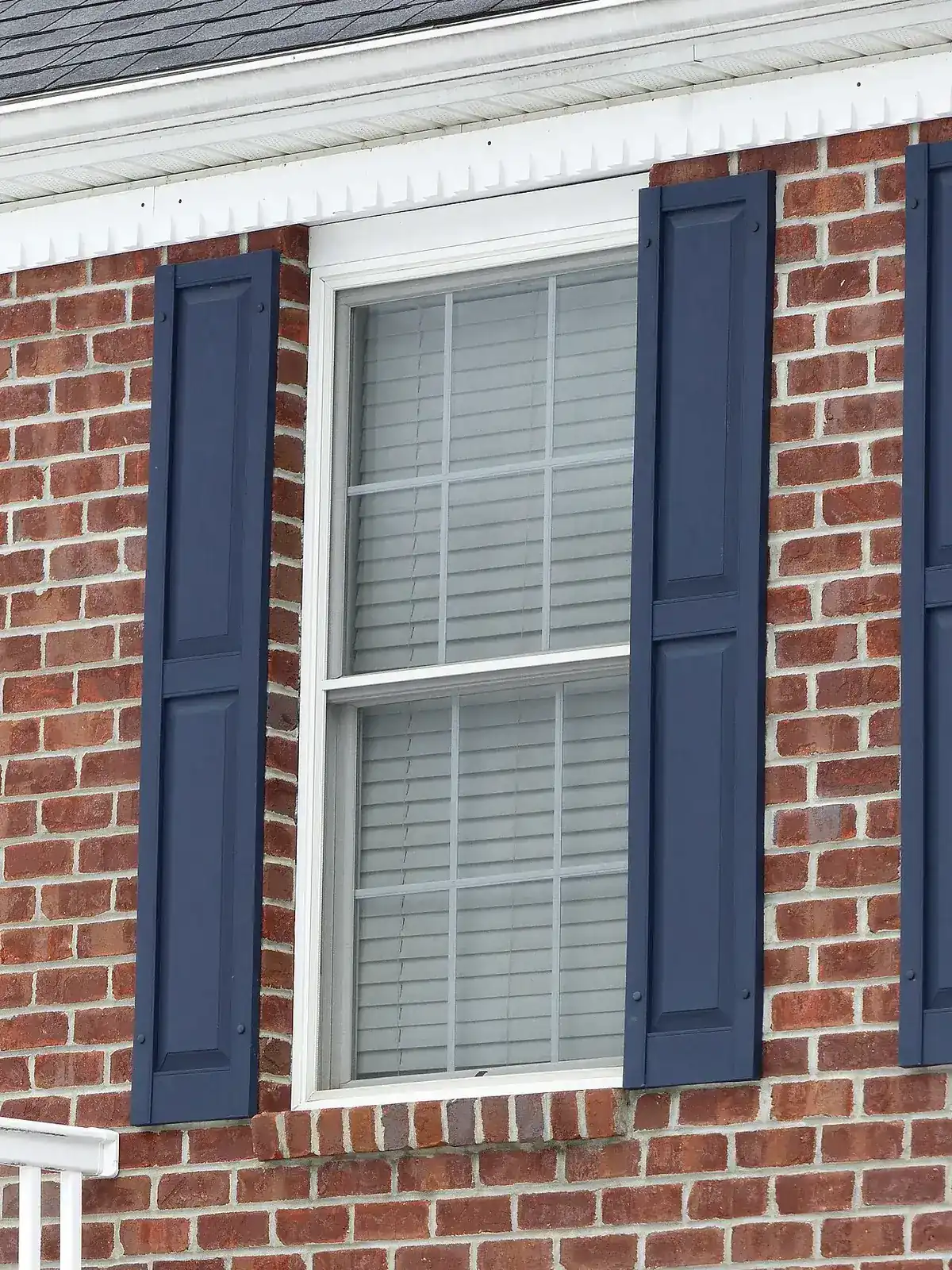
What the material actually is
Fiberglass window frames are pultruded glass fibers in a resin, which is a different animal from extruded PVC. The practical consequence is stiffness: a fiberglass frame holds its shape across a wide span without the internal reinforcement a wide vinyl frame needs, and it expands and contracts at close to the same rate as the glass it holds.
| Situation | Fiberglass | Vinyl |
|---|---|---|
| Standard double hung opening, white | Works, costs more | The sensible choice |
| Wide picture window or slider | Holds its shape across the span | Needs internal reinforcement |
| Dark exterior color | Handles heat and color well | Buy the color from the factory, never paint it |
| Owner wants to repaint later | Takes paint | Painting voids most finish warranties |
| Tight budget across a whole house | Pushes the total up by 30 to 50 percent | The reason most quotes are vinyl |
Swipe the table sideways to see every column →
Price relationship from HomeScore's Georgia window page, read October 16, 2026. The rest describes material behavior rather than any one manufacturer's product.
The money, in context
Take the Georgia vinyl baseline of $575 to $1,100 per window installed and add 30 to 50 percent, and you are looking at roughly $750 to $1,650 per window. Across a 15-window house, that premium is somewhere between $2,600 and $8,300 depending on where in the range both sit, which is enough money that the answer should be opening by opening rather than whole house.
What to check before paying the premium
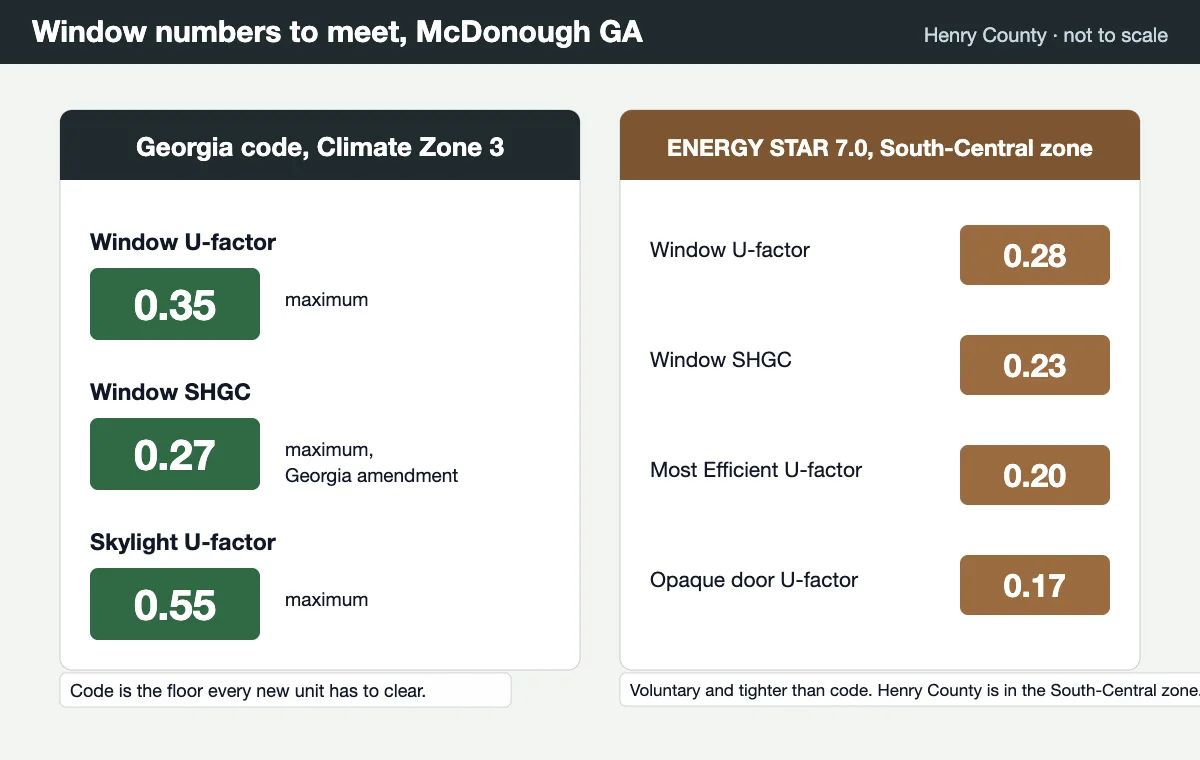
- The NFRC numbers. Material is an input; the label is the output. Zone 3 wants 0.35 U-factor and 0.27 SHGC or better either way.
- Finish warranty terms, particularly on dark colors and particularly if you intend to paint later.
- Whether the quote is fiberglass or composite, and if composite, what is actually in it.
- Frame width. Fiberglass frames can be slimmer for the same strength, which means slightly more glass in the same opening.
- Lead time. Fiberglass lines often run longer than vinyl, which matters if a committee approval is also in the queue.
If a dark frame is the reason you are here, check your covenants before ordering. Frame color is one of the details architectural committees most often restrict, and a made-to-order fiberglass unit in the wrong color is an expensive mistake. The HOA approval guide covers what local declarations say, and the cost guide has the baseline numbers this page is built on.