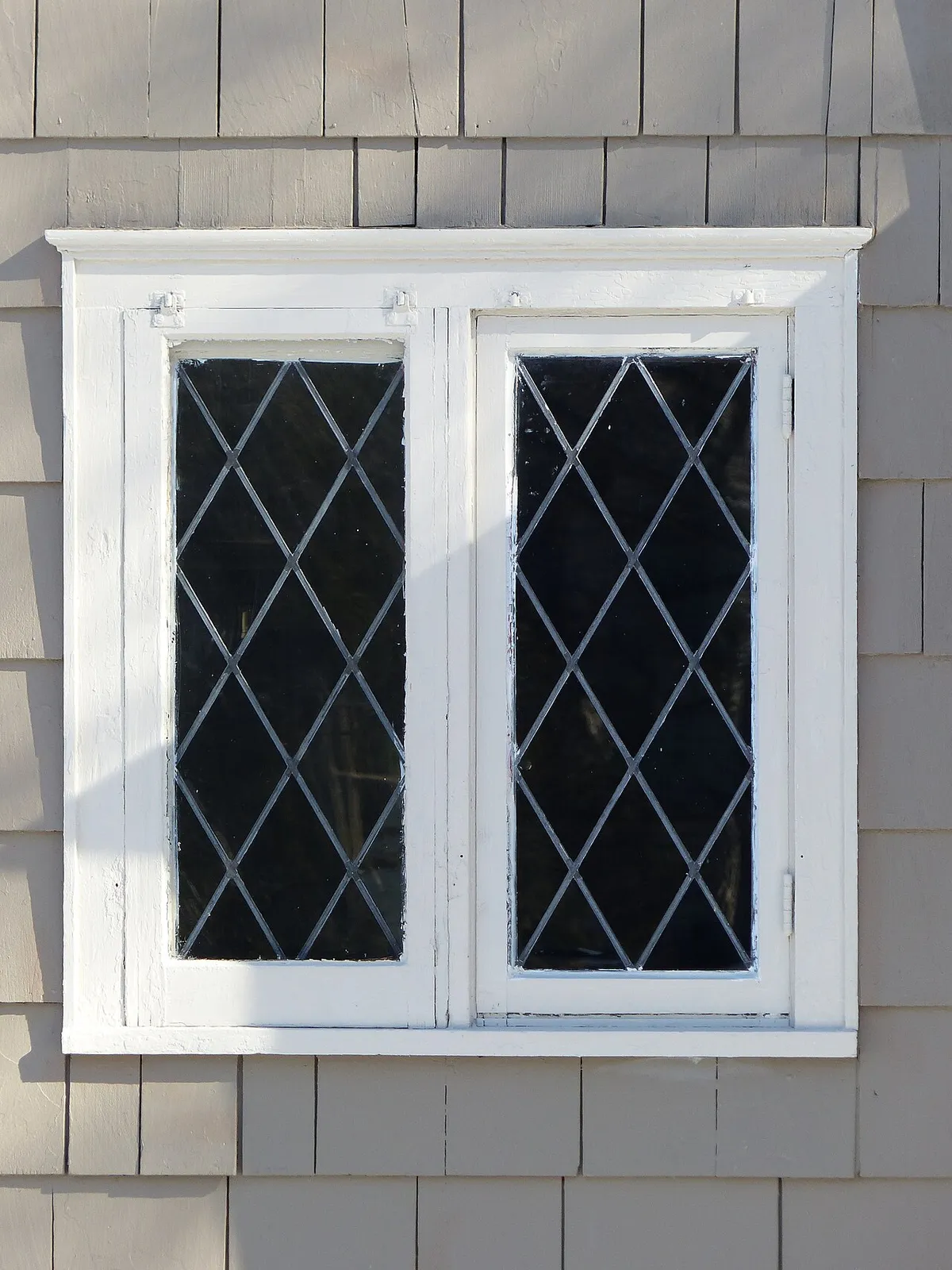
How a casement differs from everything else
Nothing slides. The sash is hinged on one side and swings out like a door, driven by a crank through a geared operator mounted in the sill. When you crank it shut, the sash is drawn against a gasket that runs the whole way round, and on most units a multipoint lock pulls it tighter at two or three points.
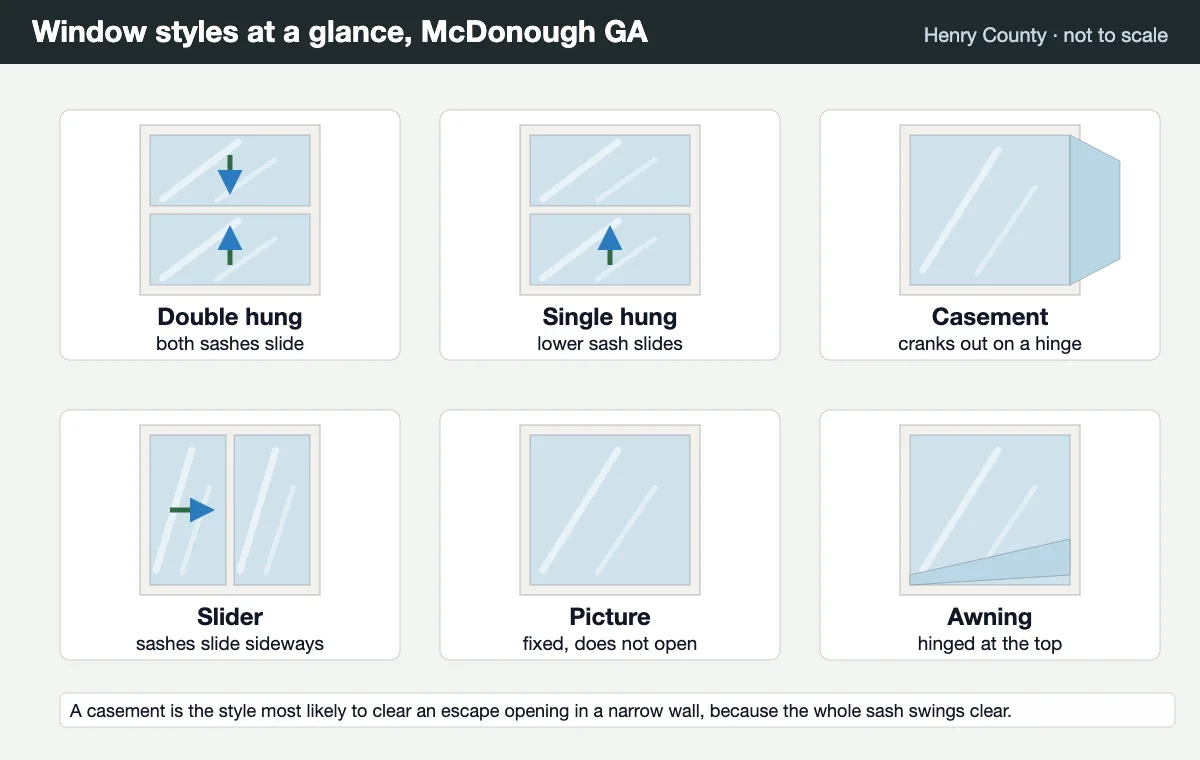
That geometry is why casements turn up over kitchen sinks and behind counters: the crank is reachable when the window itself is not. It is also why they are the style of choice on a narrow wall, because width that would be split between two sliding sashes is all usable at once.
The egress argument
A bedroom escape opening needs 5.7 square feet of net clear opening with at least 24 inches of clear height and 20 inches of clear width. A casement delivers nearly the full frame opening, so a window that would never make the numbers as a double hung often clears them comfortably as a casement.
Cost, and what you are paying for
| Style | National installed range | What drives the difference |
|---|---|---|
| Casement | $589 to $2,993 | Operator, hinge arms, multipoint lock |
| Double hung | $478 to $2,412 | Two sashes, balances, simpler hardware |
| Awning | $750 to $1,886 | Top-hinged, smaller typical sizes |
| Shaped or specialty | $705 to $6,276 | Custom glass and frame work |
Swipe the table sideways to see every column →
Home Depot's own national installed ranges, read October 16, 2026. Georgia-specific pricing for a standard vinyl unit runs $575 to $1,100 installed, so treat the national ranges as the shape of the gap between styles rather than a local quote.
Living with a casement
- The screen sits on the inside, because the sash swings out. That changes how it looks from indoors.
- An open casement catches wind like a sail. On an exposed elevation, open it partway and latch it.
- They sit over walkways and decks badly, because an open sash projects into the space.
- Crank handles fold down on most units so curtains and blinds clear them.
- Operators need the occasional drop of lubricant. The ones that fail are the ones nobody opens.
If the crank is the problem
A casement that will not open is usually a stripped operator rather than a dead window. Repair or replace covers what is replaceable. If the frame itself has gone, the installation page explains the difference between an insert and a full-frame replacement.