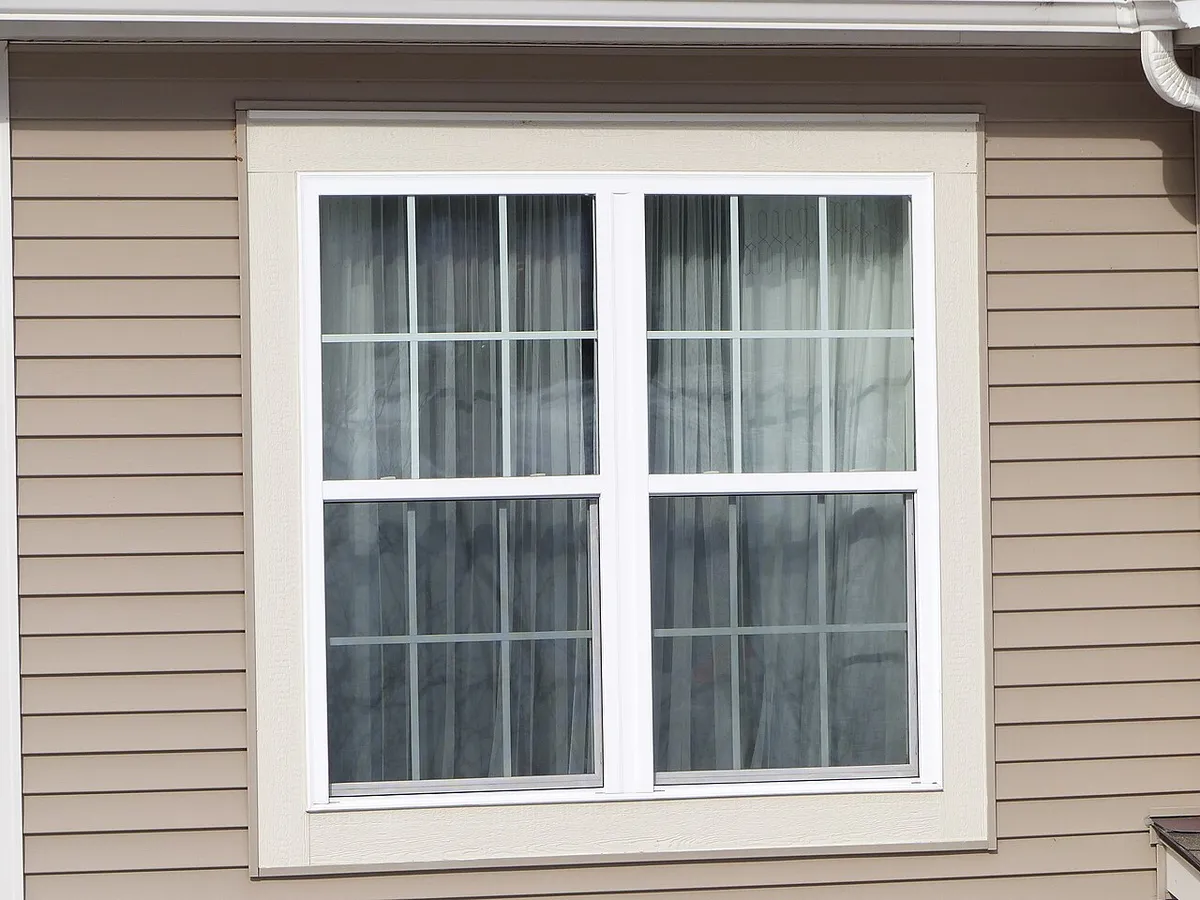
Insert or full-frame: the choice that sets the price
Most McDonough houses get insert replacement, where the new unit goes inside the frame that is already in the wall. It is quicker, it leaves your interior and exterior trim untouched, and it costs less. The trade is a slightly smaller piece of glass, because the new frame sits inside the old one.
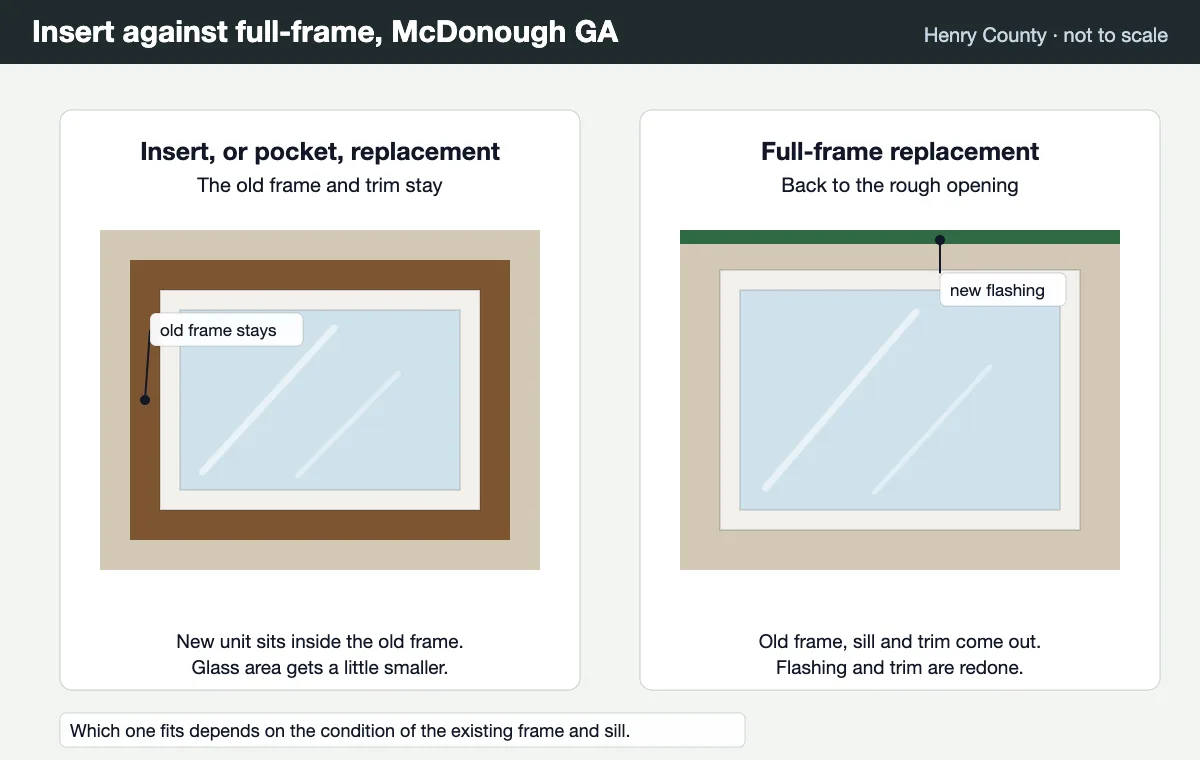
Full-frame replacement is the other option, and it is not an upsell when the frame or sill has gone soft. Taking the old frame out is the only way to see and seal what is behind it. It is also what you need when an opening is being made larger or smaller, which is usually a bedroom escape-opening question.
| Insert (pocket) | Full-frame | |
|---|---|---|
| What comes out | The old sashes and hardware | Sashes, frame, sill, interior and exterior trim |
| What stays | Frame, sill, trim, flashing | The rough opening in the wall |
| Glass area | A little smaller than before | Can match or grow the original |
| Time per opening | Shorter | Longer, and the trim is redone |
| Typical reason to pick it | Frame and sill are sound | Rot, water damage, or changing the opening size |
| Effect on the quote | Lower | Higher, because of the carpentry and the flashing |
Swipe the table sideways to see every column →
A quote that does not say which method it covers is not comparable to one that does. Ask for it in writing.
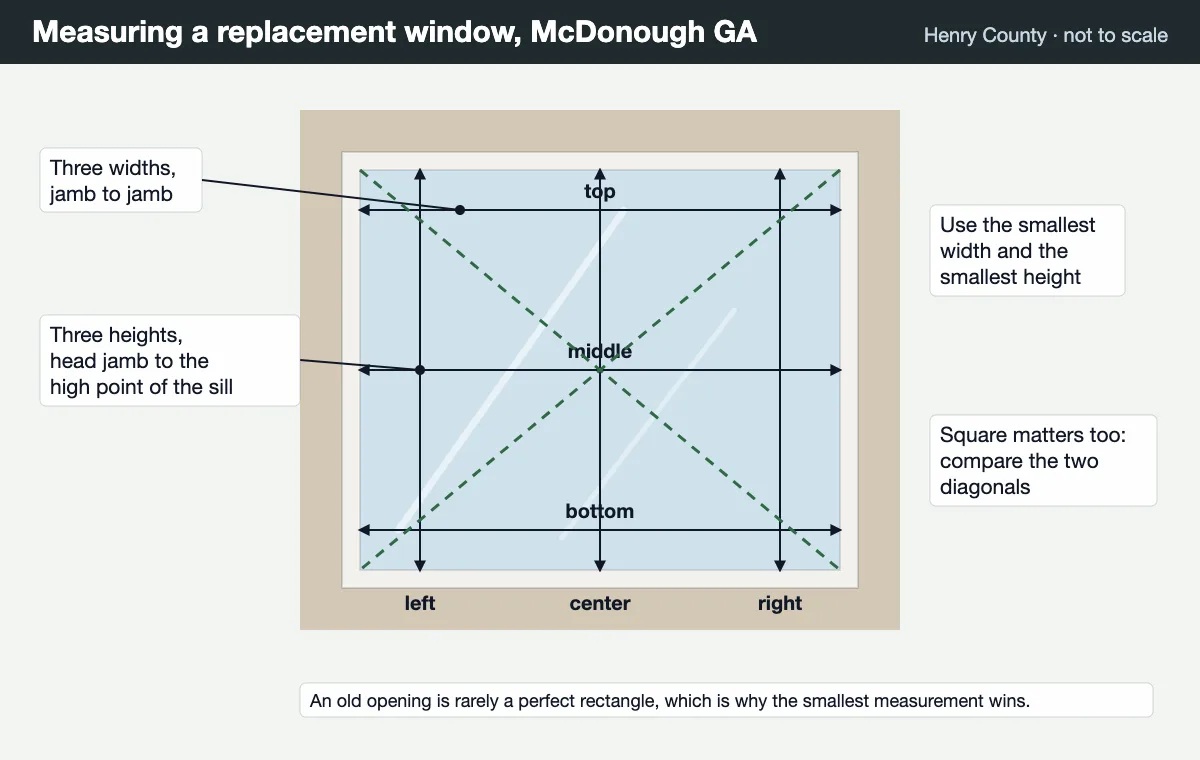
How a replacement window gets measured
A replacement opening is measured three times across and three times up, and the smallest of each set is the number that goes on the order. Old openings settle and go out of square, and the window has to fit the tightest point, not the average.
This is the single best argument against buying your own windows and hiring labor separately. Materials are roughly two thirds of a window job's cost, so supplying them yourself looks like the saving of the century right up to the moment a $900 unit arrives a quarter inch too wide and is nobody's problem but yours.
What a correct installation actually includes
The unit is only half the job. The Department of Energy puts it bluntly in its own guide to energy-efficient windows: even the most energy-efficient windows can result in a drafty house and moisture condensation if they are not properly installed. What that means on site:
- The opening is checked for square, level and plumb before anything goes in.
- The unit is shimmed at the points that carry load, not packed out wherever a gap shows.
- The gap between unit and framing is insulated, not stuffed, so the frame is not squeezed out of shape.
- The exterior is sealed and, on a full-frame job, flashed so water that gets behind the trim has a way out.
- The sashes are operated and locked before the crew leaves, with the unit still adjustable.
- Old units are hauled away, which is a line item worth confirming.
Permits for window installation in McDonough and Henry County
Two offices issue permits in this county, and both enforce the same rules. The City of McDonough covers addresses inside the city limits on 678-782-6224; Henry County covers everywhere else on 770-288-6051. Both enforce the Georgia State Minimum Standard Codes, which require a permit to construct, enlarge, alter, repair, move or demolish a building, and the list of work those codes exempt from a permit does not name windows or doors.
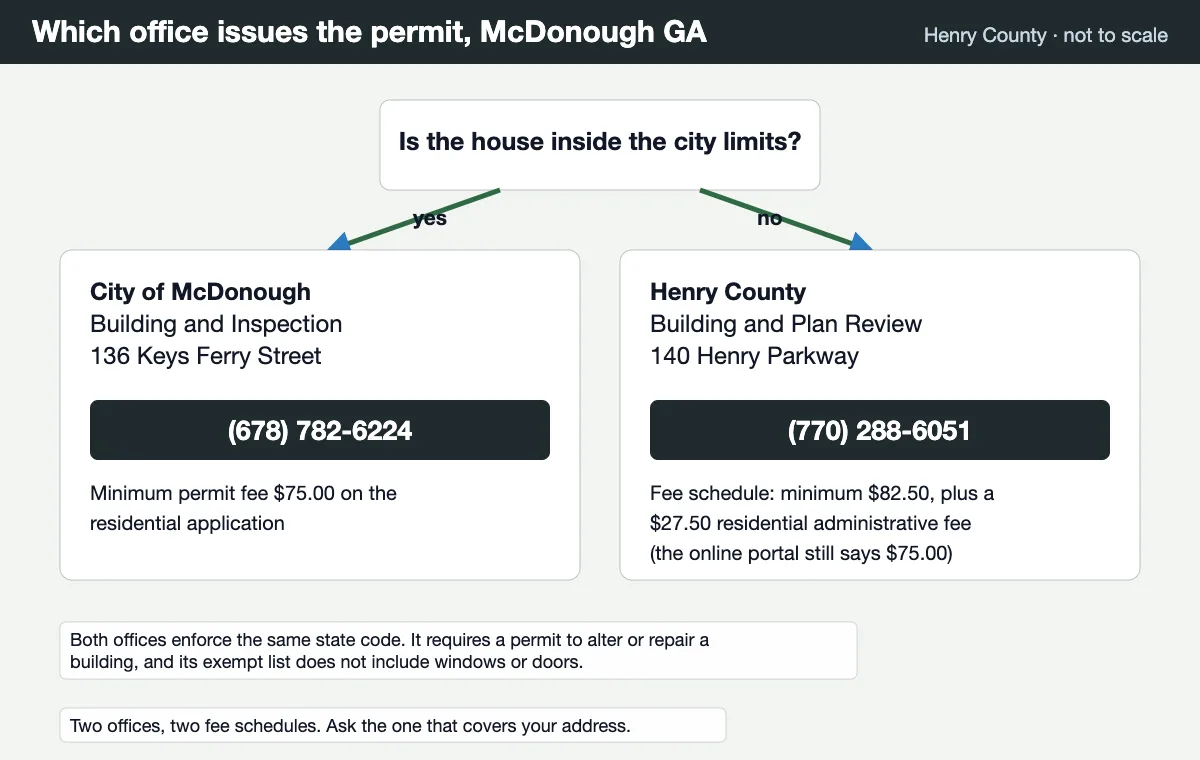
The Henry County window permit guide has both fee schedules, the exact wording each office publishes and the conflict between the county's portal and its own fee sheet.
When installation turns into carpentry
Soft sills and rotted trim
Press a screwdriver into the outside corner of a wood sill. If it sinks, the installer is going to find more of it once the old unit is out. That is a full-frame job plus repairs, and it is better priced before the work starts than discovered mid-morning. Window trim and sill rot repair covers what that involves.
Bedroom windows and escape openings
An insert unit is slightly smaller than what came out, which is fine in a living room and a problem in a bedroom that was already close to the minimum. The numbers to protect are 5.7 square feet of net clear opening, 24 inches of clear height, 20 inches of clear width and a sill no more than 44 inches above the floor. The egress guide explains how to check yours.
What this costs around McDonough
Installed, a standard vinyl double-hung replacement runs $575 to $1,100 per window across Georgia, and real Home Depot jobs in the 30252 and 30253 ZIP codes work out between about $639 and $1,737 a window depending on the brand. Labor is roughly a third of that total, materials the rest. The window replacement cost guide has the full table with the date on every source.
If the openings are ready to be measured, send the address and the window count and we will get it priced.